
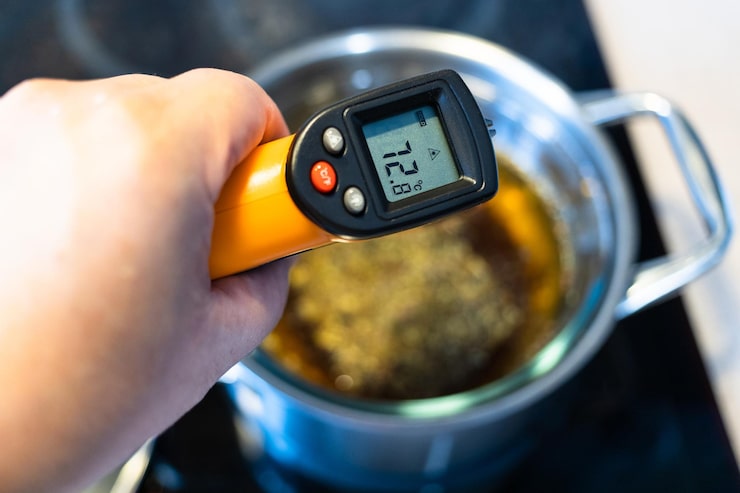
Cooking meat to perfection requires more than just good instincts—it requires precision. Whether you’re grilling steaks, roasting a chicken, or smoking ribs, knowing the exact internal temperature ensures food is safe, flavorful, and never overdone. This is where an instant read meat thermometer becomes an essential kitchen tool.
Unlike traditional dial thermometers that can be slow and inaccurate, instant read models provide quick and reliable results. This guide walks you through what to look for, compares different thermometer types, explores pros and cons, and highlights real-life use cases so you can confidently choose the right tool for your cooking needs.
Devices | Features | Price |
|---|---|---|
Instant Read Meat Thermometer | Fast & Accurate Digital Food Thermometer |
What to Consider Before Buying an Instant Read Meat Thermometer
1. Accuracy
- Look for thermometers with a margin of error within ±1°F or ±0.5°C.
- High accuracy is crucial for dishes like steak, where a few degrees make the difference between medium-rare and medium.
2. Speed of Reading
- Fast models give readings in 2–3 seconds.
- Slower models may take 5–10 seconds, which can be inconvenient when grilling or checking multiple pieces of meat.
💡 Tip: For barbecuing or outdoor grilling, the faster the thermometer, the better—you won’t have to keep the lid open long.
3. Probe Length and Design
- Short probes (3–4 inches): Suitable for thin cuts of meat or indoor cooking.
- Long probes (5–6 inches): Better for grilling, smoking, or reaching deep into roasts.
- Foldable probes: Add convenience for storage and portability.
4. Display and Readability
- Backlit displays are helpful in low-light conditions (outdoor BBQs, evening cooking).
- Rotating screens make it easy to read from any angle.
- Large numbers improve visibility, especially for older users.
5. Durability and Build Quality
- Water-resistant models: Useful when dealing with splashes or steam.
- Heat-resistant casing: Protects against accidental contact with hot surfaces.
- Sturdy construction: Ensures long-term reliability.
6. Extra Features
- Calibration options: Allow you to recheck accuracy over time.
- Magnetic backing or hooks: For easy storage in the kitchen.
- Auto shut-off: Preserves battery life.
- Dual-use capability: Some can measure liquids like soups, coffee, or even candy.
7. Price Range
- Budget-friendly models: Simple, functional, but fewer features.
- Mid-range models: Offer speed, accuracy, and durability.
- Premium models: Include advanced features like rotating displays, waterproofing, or professional calibration.
Product Summary: Types of Instant Read Meat Thermometers
| Feature | Basic Digital | Professional Digital | Specialty Models |
|---|---|---|---|
| Accuracy | ±2°F | ±1°F or better | ±0.5°F (lab-grade) |
| Speed | 5–10 seconds | 2–3 seconds | 1–2 seconds |
| Probe Length | 3–4 inches | 5–6 inches | Variable, specialized designs |
| Durability | Basic plastic | Water/heat-resistant casing | Premium, lab-tested materials |
| Price Range | Affordable | Mid-range | High-end |
| Best Use | Casual home cooking | Grillers, bakers, daily chefs | Professionals, enthusiasts |
Pros & Cons of Instant Read Meat Thermometers
Basic Digital Models
✅ Pros: Affordable, simple to use, portable
❌ Cons: Slower readings, limited features
Professional Digital Models
✅ Pros: Fast results, durable design, high accuracy
❌ Cons: Mid-range price may not suit casual cooks
Specialty or Premium Models
✅ Pros: Ultra-fast, highly accurate, professional-grade features
❌ Cons: Expensive, may offer more than the average home cook needs
Who It’s Best For
- Home Cooks: A reliable, budget-friendly digital thermometer helps ensure meals are safe and tasty.
- Grilling Enthusiasts: Quick-read models with long probes and durable casings are ideal for outdoor cooking.
- Bakers & Candy Makers: Specialty thermometers that handle both meat and liquids work well for multiple tasks.
- Professional Chefs: High-end, ultra-precise thermometers suit commercial kitchens and culinary perfectionists.
Real Insights: Experiences & Expert Opinions
- Griller’s Story: A backyard cook shared how switching from guessing doneness to using a thermometer improved consistency—burgers were never overcooked, and steaks hit the perfect temperature every time.
- Chef’s Insight: Culinary professionals emphasize that accuracy isn’t just about taste—it’s about food safety, especially with poultry and pork.
- Home Baker’s Experience: Instant read thermometers double as a handy tool for checking caramel or bread temperatures, making them versatile kitchen investments.
FAQs
1. Are instant read thermometers safe to use on all types of meat?
Yes, they work for beef, poultry, pork, fish, and more. They can also be used for soups and baked goods.
2. How do I test if my thermometer is accurate?
Use the ice water test (should read 32°F/0°C) or boiling water test (212°F/100°C at sea level).
3. Can instant read thermometers stay inside the oven?
No. Most are designed for quick readings and should not be left inside during cooking. Use oven-safe probes for continuous monitoring.
4. Do I need a waterproof thermometer?
Not always, but it’s helpful for grilling outdoors or working around steam and liquids.
5. How long do batteries last?
Most last several months to a year, depending on usage and features like auto shut-off.
Final Recommendation
When choosing an instant read meat thermometer, prioritize accuracy, speed, and ease of use.
- For casual cooks, a basic digital thermometer offers a reliable, budget-friendly solution.
- For grillers and frequent home chefs, a professional-grade thermometer with fast response time and durable casing is a great balance.
- For perfectionists and professionals, premium specialty models deliver ultra-fast, lab-grade accuracy worth the investment.
No matter your cooking style, an instant read thermometer ensures safe, consistent, and delicious meals. It’s a small tool that makes a big impact in every kitchen.